In this amazing Baroque route tour you will explore theree temples: all of them located in the South Valley, the landscape and the snow cap mountains that join the capital of the Inca Empire with the jungle of Madre de Dios and Titicaca Lake. The baroque route at the begining was a commercial axis, preceding the Incas, for the transport of many products like gold, silver, coca leaves and animal fibres. Since that time, archaeological sites can be found in its path, such as Tipon and Rumicolca, and ancient fabric factories as the one that can be found in Lucre town. the baroque route is formed by small villages where the main activity is farming and traders and there are also towns of sorcerers, bakers, brick builders, and of course musicians and dancers who pay homage to the Virgen of Carmen and the Lord of Qoyllor Riti.
Itinerary
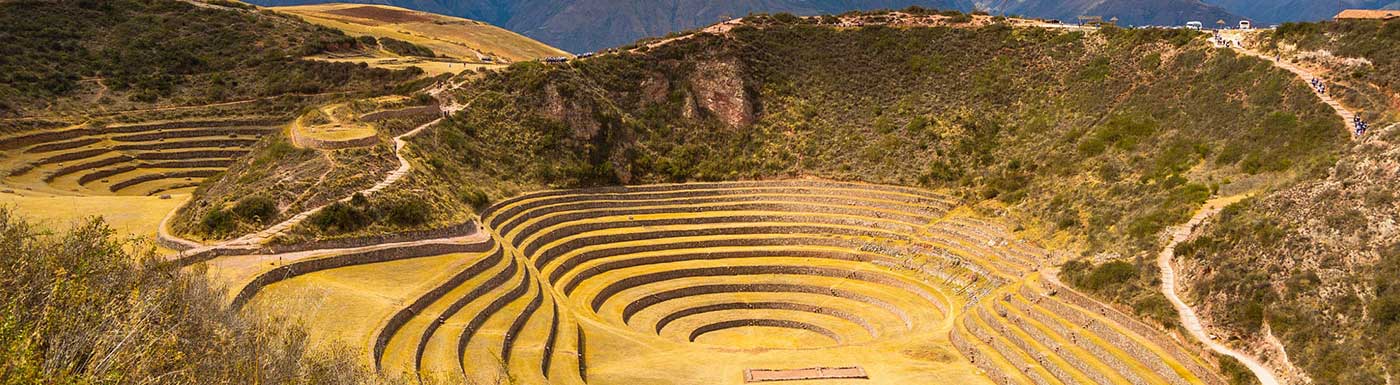
TIPÓN, located east of Cuzco, are Inca ruins which may have been a park for the upper class or an agricultural centrum. Even today water rushes through the channels, and the wide terraces are in perfect condition. Several surrounding ruins have been excavated, and many more are visible below the soil.
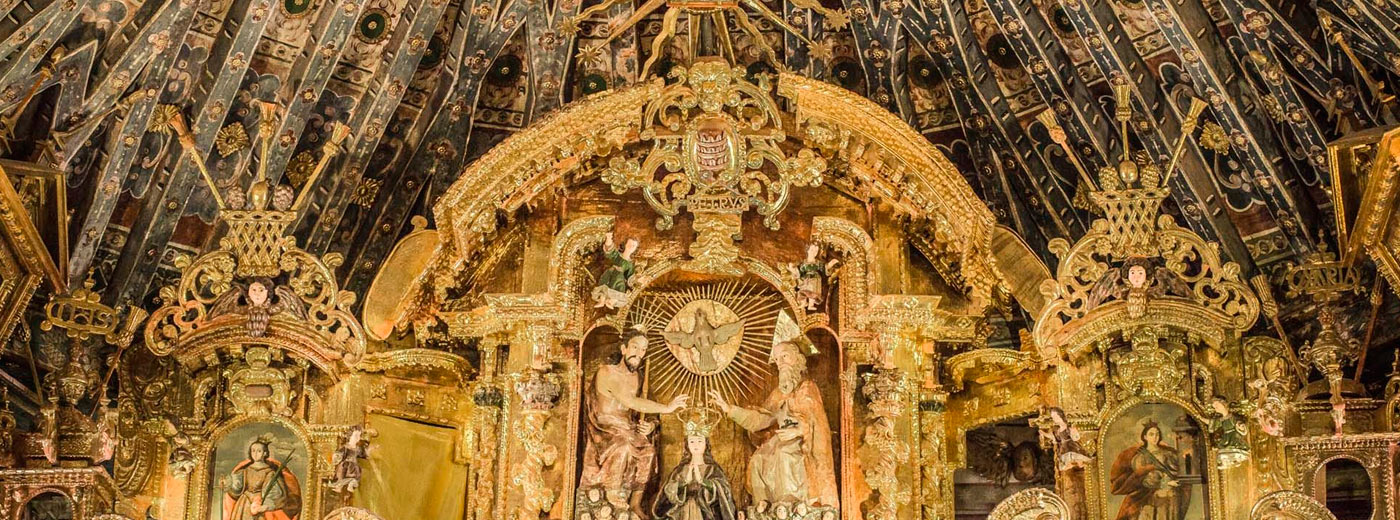
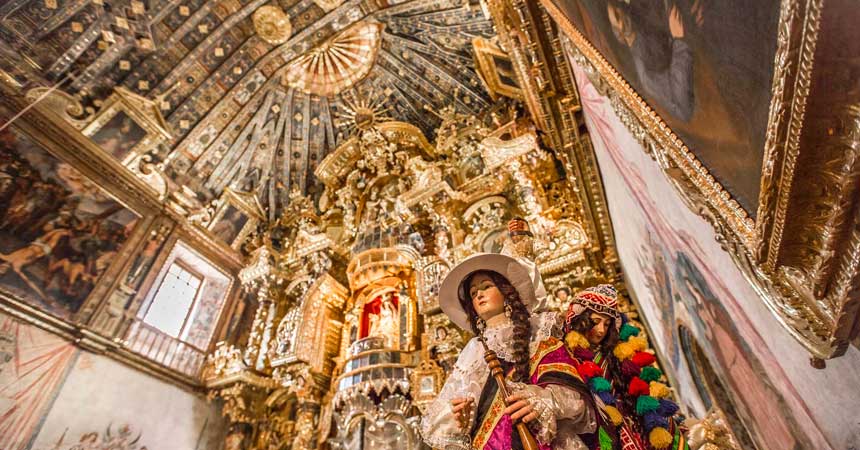
CANINCUNCA, Located on an ancient Waricentre, next to the small lake of Urcos, Canincunca gets its name from the narrow pass located en route from Cusco to Puno.Construction of the chapel began at the beginning of the XVII century and consists of a single nave, with inner walls which are richly decorated with murals and gold leaf ribbons.
HUARO, It has a Renaissance style and retains more than beautiful 60 sculptures and 50 paintings of the Cusqueña School of Art, in addition to silverware, altarpieces and other movable goods. Built at the end of the XVI century and the beginning of the XVII century, the stunning murals of its interior cover the entirety of the ceiling and walls.
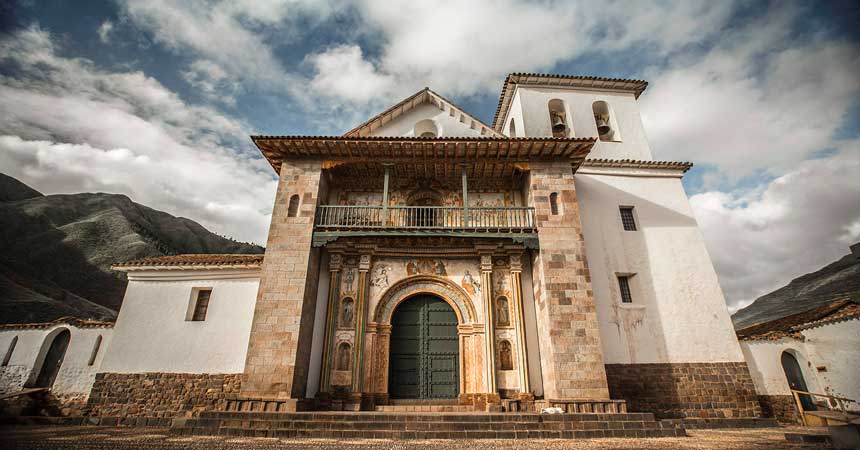
ANDAHUALLILAS, This majestic artistry is also reflected in the coffered ceiling of Mudejar influence, the mural paintings of Luis de Riaño, paintings of the Cusqueña School of Art, the polychromy of the ceilings and the triumphal arch that divides the presbytery and the main nave.Its baptistery retains the baptismal formula in Latin, Spanish, Quechua, Aymara and Puquina.
PIKILLAQTA, is a village of the Wari people. Wari was the center village and other cities like Pikillaqta were influenced from it. The Wari also inhabited many other sites around the area. The site was occupied from about 550 to 1100AD. Its main use was for ceremonies and the site was not complete when it was abandoned.
Include / No include
Included
- Transfer from Hotel in Cusco
- Transport
- Guide
- Entrances
Not included
- Tips